
Headache and Tooth Pain: Understanding the Hidden Connection

Many people ask, “Can tooth pain cause headaches?” The short answer is yes, dental issues often trigger head pain because of the close connection between the nerves and blood vessels in your face and mouth. Whether you’re dealing with a dull ache, sharp discomfort, or tooth pain while pregnant, these symptoms may point to underlying oral health concerns. Understanding how tooth pain and headaches overlap can help you know when to seek help from an Emergency Dentist in Mountain View.
How Tooth Pain Can Lead to Headaches
Your teeth and head share a major nerve pathway known as the trigeminal nerve. This nerve controls sensation in your jaw, teeth, cheeks, and forehead. When a tooth infection, gum disease, or temporomandibular joint disorder irritates this nerve, the discomfort can spread upward, causing what many people describe as a tooth pain headache.
This type of referred pain means a dental problem can be the source of what feels like a migraine or tension headache. Left untreated, dental issues can worsen, making the connection between headache and tooth pain stronger and more persistent.
Common Dental Problems That Cause Headaches

Here are the most frequent oral health triggers that lead to both tooth pain and headaches:
1. Tooth Infections or Abscesses
A serious infection inside the tooth can irritate surrounding nerves and tissues. As bacteria build up, inflammation spreads, often resulting in intense pain that radiates into the head. This is one of the strongest answers to the question: Can tooth pain cause headaches? Absolutely.
2. Bruxism (Teeth Grinding)
Grinding your teeth stresses the jaw muscles and can lead to chronic tension headaches. Many people grind their teeth at night without realizing it.
3. Temporomandibular Joint Disorder
TMJ, or temporomandibular joint disorder, can cause headaches, facial pain, jaw clicking, and difficulty chewing. The joint sits close to the trigeminal nerve, which explains why TMJ and headaches often appear together.
4. Impacted or Problematic Wisdom Teeth
When wisdom teeth press against nerves, they can create swelling, pressure, and headaches similar to sinus pain.
5. Sinus Infections
Sinus pressure can push against the roots of upper teeth. This creates tooth pain that feels like a headache, and dental issues can also worsen sinus inflammation.
6. Cracked Teeth
Small fractures irritate the inner nerve of the tooth. These cracks can lead to sharp pain that spreads through the trigeminal nerve into the forehead or temples.
How Dentists Diagnose Headache and Tooth Pain
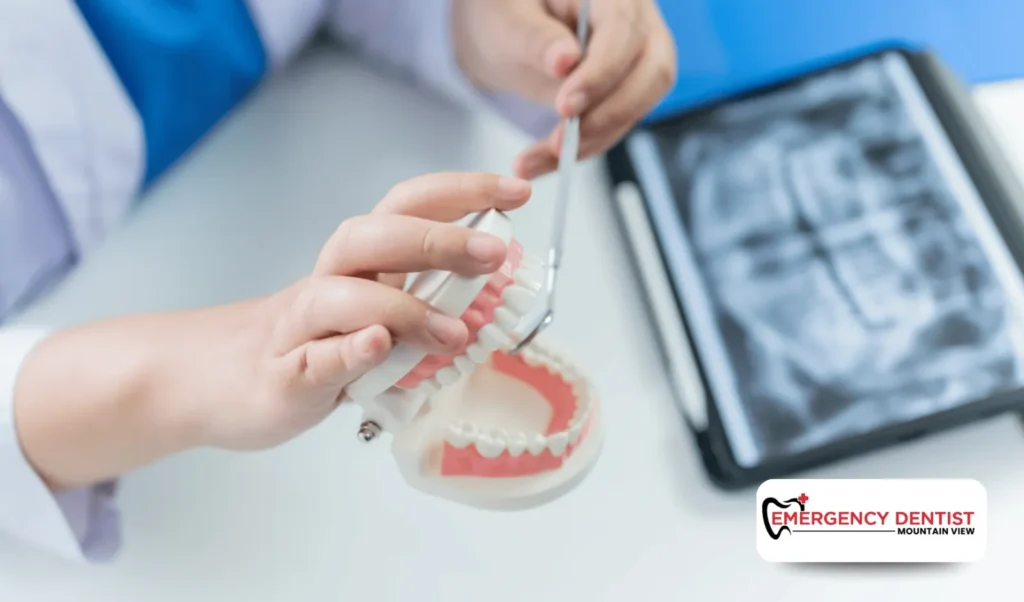
To pinpoint the cause, dental professionals may perform:
- A visual exam to look for tooth decay, cracks, swelling, or gum disease
- Digital X-rays to check tooth infections, bone health, and sinus proximity
- TMJ evaluation, including jaw movement and muscle tenderness
- A review of your headache pattern, frequency, and dental history
Proper diagnosis is essential because ignoring symptoms or leaving them untreated can lead to more severe complications.
When to Call an Emergency Dentist in Mountain View
Certain dental problems need immediate attention:
- Tooth infections: An abscess may require drainage or a root canal. Left untreated, infections can spread and affect blood vessels or other tissues.
- Severe bruxism or TMJ pain: A custom night guard may be needed to protect your dental health.
- Impacted wisdom teeth: These may require extraction if they cause swelling, pressure, or ongoing headaches.
If you develop fever, swelling, difficulty chewing, or severe headache and tooth pain at the same time, contact an Emergency Dentist in Mountain View right away.
Preventive Dental Care Tips
Practicing good dental care can significantly reduce your risk of developing tooth pain headaches. Here’s how to protect your oral health:
- Brush and floss daily using fluoride toothpaste
- Avoid sugary foods that contribute to tooth decay
- Schedule regular dental visits and routine dental procedures
- Use a custom night guard if you grind your teeth
- Rinse your mouth with warm saltwater (a teaspoon of salt in a cup of water) to reduce inflammation
- Try home remedies like applying a cold compress to ease temporary discomfort
- Be careful with whitening products that can irritate sensitive teeth
Caring for your oral health early helps prevent problems that can later trigger headaches.
Special Note: Tooth Pain While Pregnant
Pregnant women often experience tooth pain while pregnant due to hormonal changes, increased risk of gum disease, and morning sickness that can weaken enamel. These dental issues can lead to headaches because inflamed gums and irritated nerves put added stress on the trigeminal nerve.
Most dental procedures are safe during the second trimester, but always talk to your healthcare provider before scheduling treatment.
Take Action Before Symptoms Get Worse
So, can tooth pain cause headaches? Yes, dental issues and headaches are closely linked through shared nerve pathways. From tooth infections to TMJ disorders, untreated problems often intensify both the toothache and the headache.
If you’re in Mountain View and experiencing ongoing headache and tooth pain, don’t wait. Early diagnosis and proper dental care can protect your oral health and help you find lasting relief.