

Extraction vs Root Canal:
Choosing the Best Option for You
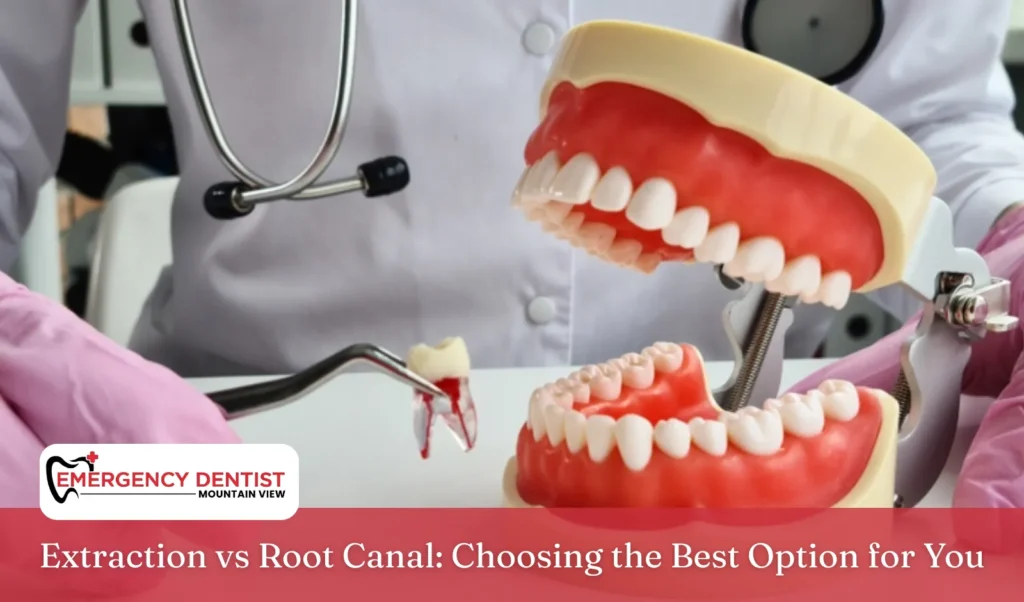
When a tooth becomes severely decayed, infected, or painful, your dentist may recommend one of two common treatments: a root canal or an extraction. Both options are effective, but they serve different purposes. Understanding root canal vs extraction can help you choose the option that best supports your long-term dental health and comfort.
What Is a Root Canal Procedure?
A root canal procedure is a dental procedure designed to save your natural tooth. During root canal treatment, the dentist removes the infected or diseased tissue inside the tooth, a procedure that involves removing the infected pulp. Once the pulp is out, the dentist cleans and disinfects the root canals and fills them with a material called gutta percha to fill and seal the area. This helps prevent future infection and preserves the natural tooth structure.
Because the treatment keeps your natural teeth in place, it protects your bite, supports jawbone health, and reduces the chances of shifting teeth later on.
What Happens During a Tooth Extraction?
A tooth extraction is a straightforward dental procedure where the entire tooth is removed. This option is usually recommended when the tooth is too damaged for repair. During the procedure, your dentist begins by numbing the area to ensure comfort. Once the tooth is removed, the socket is cleaned to prevent infection.
While extractions can offer quicker relief, the empty space left behind often needs to be restored with a bridge or implant to maintain proper chewing and alignment.
Root Canal vs Tooth Extraction: Key Differences
When comparing root canal vs tooth extraction, it helps to know how they differ in purpose and long-term results.
- A root canal focuses on removing the infected pulp while keeping the natural tooth in place. This option is often better for maintaining alignment and jawbone strength.
- An extraction removes the tooth entirely and may require future treatments, like implants, dentures, or bridges, to restore function.
In many cases, a root canal may cost more upfront, but it can be more affordable in the long run because you keep your natural tooth and may avoid replacement procedures.
Choosing between extract tooth vs root canal often depends on how damaged the tooth is, your personal preferences, and your long-term dental goals.
When a Root Canal Is the Better Choice
A root canal is typically recommended when:
- Most of the tooth structure can still be saved
- You want to save your natural tooth
- The infection hasn’t spread beyond the pulp
- You’re focused on keeping your natural alignment and bite
By choosing root canal therapy, you keep the tooth in place and avoid more complicated restorative work down the line.

When Extraction Makes More Sense
Tooth extraction may be the preferred option when:
- The tooth is severely cracked or broken
- Decay has spread too far
- You plan to replace the tooth with a bridge or implant
- You prefer a quick solution with fewer steps
In these cases, extraction vs root canal leans toward removing the tooth to protect nearby teeth and gums.
After an Extraction: Restoring the Space
Leaving an empty space in your smile can lead to shifting teeth, difficulty chewing, and bone loss. This is why many people choose a bridge or implant after extraction. Both options help restore your smile and keep your bite stable.
Long-Term Oral Health Considerations
Thinking about tooth root canal vs extraction also means thinking beyond the immediate problem. Keeping the natural tooth through a root canal helps support the jawbone, maintain normal chewing patterns, and prevent gaps. An extraction, while a valid choice, often requires later restoration to avoid long-term issues.
Tooth Pain? Call an Emergency Dentist in Mountain View
If you’re dealing with sudden tooth pain, swelling, or signs of infection, contact an Emergency Dentist in Mountain View as soon as possible. Early care can determine whether the tooth can be saved with root canals or if tooth extractions are needed. Acting quickly offers the best chance of protecting your smile.
Conclusion
Deciding between canal vs extraction depends on the condition of your tooth, your oral health goals, and guidance from your dentist. A root canal is usually preferred when the tooth can still be saved, while extraction is ideal when repair is no longer possible. Whatever option you choose, timely treatment helps protect both your comfort and your long-term dental health.