

What Is a Dental Implant?
Procedure and Smile Restoration
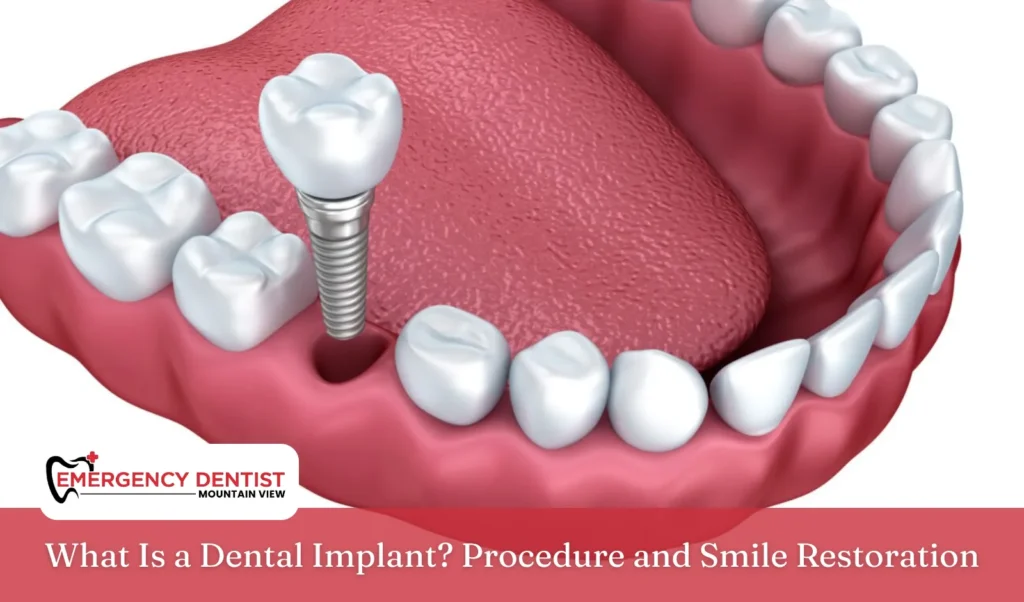
What is a dental implant, and why is it one of the most trusted solutions for tooth replacement? A dental implant is a durable and natural-looking artificial tooth designed to restore missing or damaged teeth. Unlike a removable denture, a dental implant is surgically inserted into the jawbone and becomes attached to the implant site. This makes it feel and function like natural teeth, improving your oral health, chewing ability, and smile confidence.
If you’re considering dental implant procedures or simply want to know how they work, this guide explains the benefits, process, and long-term success. An Emergency Dentist in Mountain View can help determine if you’re a good candidate.
What Is a Dental Implant?
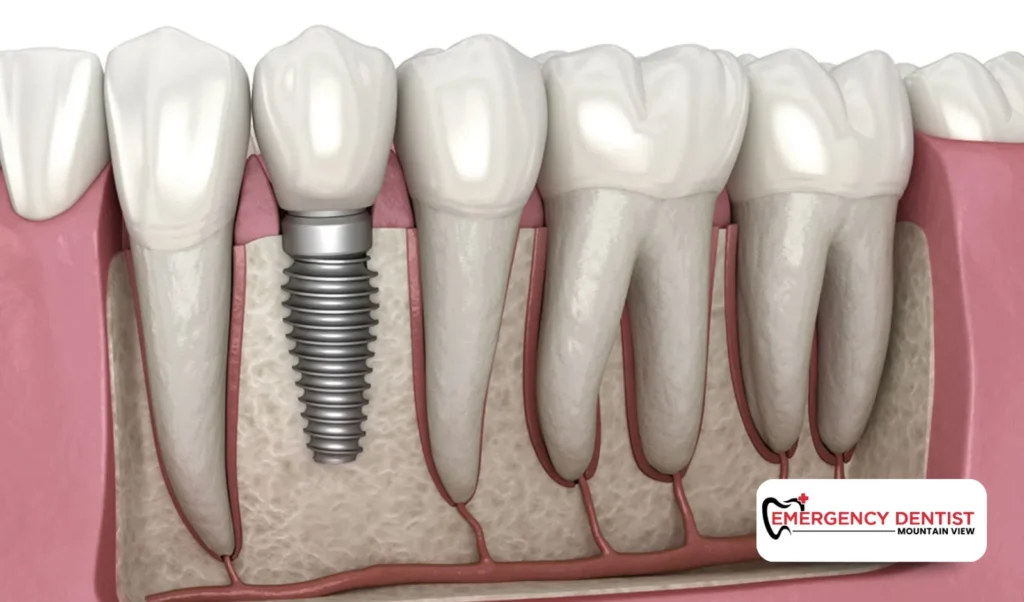
A dental implant is a surgically inserted metal implant, usually made of titanium, that functions like tooth roots. Once healed, it supports artificial teeth such as a crown, bridge, or denture. Because it becomes naturally attached to the bone, it provides strong support, similar to natural tooth roots.
The top part of the implant, like the crown, is custom-made to match your natural teeth. This allows it to blend seamlessly with your smile, both in appearance and function.
Why Choose Dental Implants?
Other tooth replacement options like a removable denture or bridge may help with appearance, but they often lack long-term stability. Dental implant procedures offer several key advantages:
- Look and feel like natural teeth
- Support oral health and protect gum tissue
- Strong chewing ability without slipping
- Prevent bone loss by replacing missing tooth roots
- Designed for long term success with proper care
According to the Academy of Implant Dentistry, dental implants have a high success rate and are one of the most reliable options for people trying to restore their smiles.
Main Benefits of Dental Implants
Dental implants offer both cosmetic and health benefits:
- Prevent bone loss and protect gum tissue
- Support speaking, chewing, and smiling naturally
- Replace missing tooth roots with stable support
- Offer stronger durability than a crown, bridge, or denture
- Provide long term success and natural comfort
Many people say that after a while, they forget they even have a dental implant because it feels so natural.
Dental Implant Procedures: Step-by-Step
Dental implant surgery is a structured and carefully planned process. Here’s how it typically works:
- Initial Evaluation
Your dentist reviews your oral health, bone structure, and gum condition to determine whether implants require additional bone support.
- Surgically Inserted Implant
The metal implant is surgically inserted into the jawbone. Local anesthesia is used to keep you comfortable.
- Healing and Integration
Over a few months, the bone naturally attaches to the implant (called osseointegration), forming a strong base.
- Attaches the Abutment & Tooth Placement
Once healed, an implant abutment is added to connect the parts. Then, the crown, bridge, or denture is attached to the implant for a complete tooth replacement.
According to the Academy of Periodontology, long-term implant success depends on healthy gum tissue and strong bone support.
Tooth Replacement Options Using Implants
There are several types of dental implant solutions used for tooth replacement:
- Single Tooth Implant – Perfect for replacing one missing tooth.
- Implant-Supported Bridge – Used when several teeth are missing in a row.
- Implant-Supported Denture – A fixed or removable denture supported by multiple implants.
These options stay firmly in place, unlike removable dentures that can slip or move.
What Causes Implant Failure?
Although dental implants have a high success rate, implant failure can occur due to:
- Poor oral hygiene
- Infection around the gum tissue
- Smoking or uncontrolled diabetes
- Weak bone structure
- Ignoring aftercare instructions
With proper care and regular dental visits, you can greatly reduce the risk of complications.
Caring for Your Dental Implants

Dental implants are designed for long term success and can last decades, or even a lifetime, with proper care. Just like natural teeth, they require:
- Brushing twice daily
- Flossing regularly
- Avoiding harmful habits (like chewing ice)
- Keeping up with dental check-ups
When to Contact an Emergency Dentist
If you notice pain, swelling, gum irritation, or a loose crown, contact an Emergency Dentist in Mountain View immediately. Early treatment can help protect gum tissue, support bone health, prevent implant failure, and keep your implant stable and comfortable long-term.
Conclusion
Dental implants are more than just a tooth replacement, they restore your smile, boost confidence, and support lasting oral health. Designed to act like natural teeth, they provide strength, comfort, and long-term reliability. Whether you need to replace a single tooth or several, dental implants are a strong and natural-looking option.
If you’re ready to improve your smile and quality of life, connect with an Emergency Dentist in Mountain View to explore your implant options and take your first step toward lasting oral health.
Frequently Asked Questions
What is a dental implant?
A dental implant is a metal post surgically inserted into the jawbone to replace missing tooth roots and support artificial teeth like a crown, bridge, or denture.
How long do dental implants last?
With proper care and good oral hygiene, dental implants can last many years, and often even a lifetime.
Is dental implant surgery painful?
Dental implant surgery is usually done with local anesthesia, so most people feel minimal discomfort during the procedure.
Can anyone get dental implants?
Most people with healthy gum tissue, strong bone support, and good oral health may be good candidates for implants. A dentist will evaluate your suitability.