

Tooth Pain After Root Canal:
Causes and Relief Guide
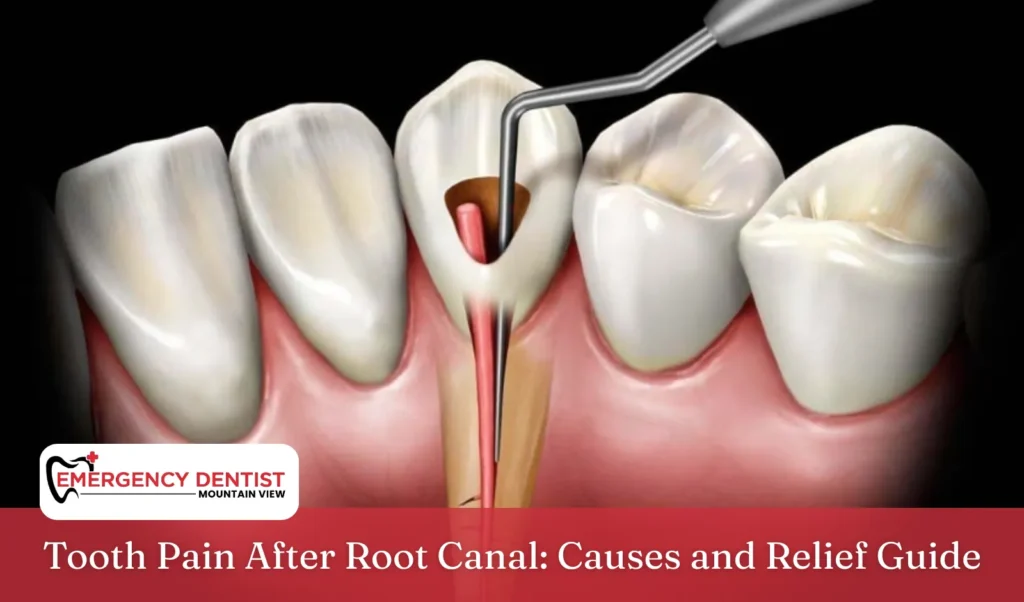
Root canal therapy is a common dental procedure designed to save an affected tooth that has been damaged by decay, infection, or injury. While it aims to relieve discomfort, some patients experience pain after root canal treatment, which can feel concerning. In many cases, this discomfort is part of the normal healing process. However, when root canal pain after treatment becomes severe, persistent, or includes symptoms like tooth pain after root canal when biting or pain after root canal in jaw, it may indicate complications that require professional attention.
In this blog, we’ll explain what causes dental pain after root canal, how to find effective pain relief, and when to contact an Emergency Dentist in Mountain View.
What to Expect After Root Canal Therapy
During root canal procedures, the dentist uses local anesthesia to numb the treated area while removing the infected pulp and cleaning and disinfecting the inside of the tooth. Although the procedure itself is usually pain free, it’s normal to feel some pain following root canal, including mild tenderness, gum pain after root canal, or pressure pain on root canal tooth. These symptoms often improve in a few days, especially with the help of counter pain relievers such as ibuprofen or acetaminophen.
Common symptoms may include:
- Pain in a root canaled tooth
- Painful jaw after root canal
- Root canal toothache pain when chewing
These are typically not a cause for concern unless they worsen or last longer than expected.
Common Causes of Pain After a Root Canal
Understanding what causes pain after a root canal can help you determine whether it’s normal or a sign of complications.
- Post-treatment Inflammation
After root canal therapy, tissues around the affected tooth may become inflamed, resulting in mild or moderate discomfort.
- Temporary Filling or Crown Issues
If a temporary filling or crown sits too high, it can cause tooth pain after root canal when biting or pressure pain on root canal tooth.
- Signs of Infection
In some cases, infection may persist, leading to severe pain after root canal, swelling, or throbbing discomfort.
- Undetected Cracks
A cracked or damaged tooth may allow bacteria to enter, causing pain following root canal or even unbearable pain after root canal.
Types of Post-Root Canal Pain
Different pain sensations may signal varying conditions:
- Mild sensitivity: Most common and usually temporary.
- Pain in tooth after root canal when biting: Often linked to a high filling or crown.
- Extreme pain after root canal: Could indicate infection or an improperly sealed tooth.
Pain after root canal in jaw or muscle soreness: Sometimes caused by holding your mouth open for an extended time.

Effective Root Canal Pain Relief and Home Care
Managing pain after a root canal often involves simple steps to reduce inflammation and protect the treated tooth.
- Use Pain Medication
Over-the-counter pain reliever options like ibuprofen or acetaminophen help manage pain and reduce swelling.
- Reduce Swelling with Cold Compresses
Applying a cold pack to the treated area helps relieve pain and reduce inflammation after root canal.
- Avoids Chewing on the Treated Tooth
To protect the filling or crown, avoid chewing hard foods on the treated side until healing improves.
- Practice Good Oral Hygiene
Brushing and flossing gently helps keep the area clean, reducing bacteria and supporting healing.
- Stick to Soft Foods
Foods like yogurt, oatmeal, or mashed potatoes reduce pressure on the treated tooth.
These simple steps can improve root canal pain relief and support smooth recovery.
When to Seek Help from a Dentist
Mild pain following the root canal typically improves within a few days. However, certain symptoms may signal complications that need professional care. Contact an Emergency Dentist in Mountain View if you experience:
- Unbearable pain after root canal
- Persistent pain after a week
- Severe pain after root canal that worsens
- Swelling in the jaw or face
- Fever, chills, or signs of infection
- Pain in tooth after root canal that spreads
You may need root canal retreatment, additional cleaning and disinfecting, antibiotics, or in rare cases, tooth extraction if the infection spreads.
How to Prevent Future Root Canal Tooth Pain
Protecting your teeth after treatment is essential for long-term oral health. Here’s how:
- Attend routine checkups with your dentist or endodontist
- Use fluoride toothpaste to strengthen enamel
- Avoid chewing ice, hard candy, or non-food items
- Practice proper brushing and flossing
- Wear a nightguard if you grind your teeth
- Follow all aftercare instructions carefully
These steps greatly reduce the risk of tooth pain after a root canal and help prevent future complications.
Conclusion
Pain after a root canal is often part of the healing process, and most patients feel better within a few days. Mild root canal tooth pain or gum sensitivity typically improves with rest, good hygiene, and counter pain relievers. However, if you experience severe pain after root canal, persistent swelling, or signs of infection, it is important to seek professional help promptly.
With proper pain management, attentive home care, and expert support, you can protect your treated tooth, improve healing, and maintain strong oral health for years to come.